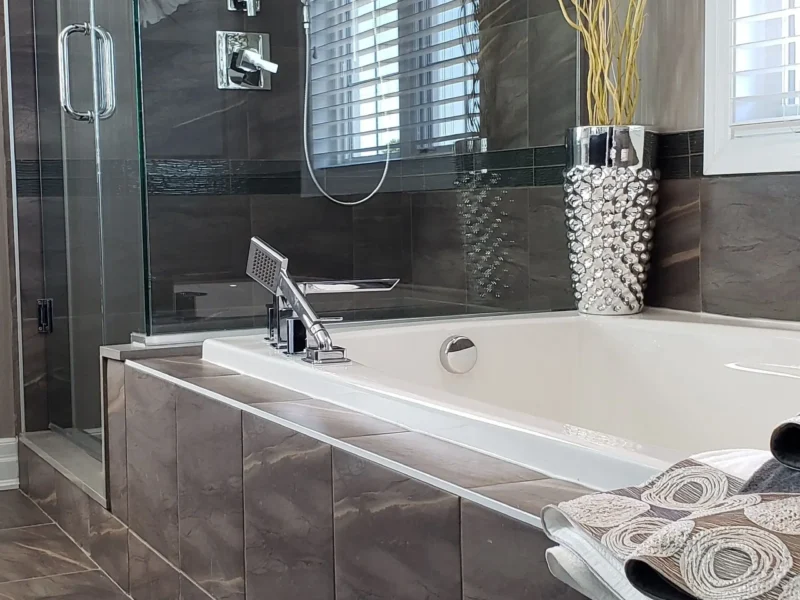
The difference comes down to how each tile is made. Manufacturers fire porcelain clay at higher temperatures and press it under greater density, which produces a tile with a water absorption rate below 0.5%. Ceramic tile fires at lower temperatures and carries more porosity, so it absorbs more moisture over time. That single property drives most of the decisions you will make between porcelain bathroom floor tiles and standard ceramic options.
Types and Finishes: Glazed, Unglazed, and Ceramic Variations
Both porcelain and ceramic tile come in glazed and unglazed finishes, and the finish changes how the tile performs underfoot and against moisture. Glazed tile carries a hard, non-porous coating fired onto the surface, which blocks water and resists stains from soap, hair products, and cleaning chemicals. Unglazed tile shows its natural material through the surface, which gives it more texture and slip resistance but less protection against staining.
Full-Body vs. Glazed Porcelain
Full-body porcelain carries the same color and material through its full thickness, so chips and scratches blend into the surface instead of exposing a different layer underneath. Glazed porcelain applies a decorative layer on top, which allows for more pattern and color options but reveals the base material if the surface chips. Homeowners who want a wood-look or stone-look bathroom porcelain tile lean toward the glazed version for the design flexibility it offers.
Where Each Tile Performs Best in a Sarasota Bathroom
Florida’s humidity and the daily use of a bathroom floor put more stress on tile than most other rooms in the house. The table below breaks down how porcelain and ceramic tile compare across the factors that matter most for a bathroom installation.
| Factor | Porcelain Tile | Ceramic Tile |
|---|---|---|
| Water absorption | Below 0.5% | 0.5% to 3% |
| Best use | Shower floors, tub surrounds, high-moisture bathrooms | Powder rooms, accent walls, dry-climate bathrooms |
| Durability (PEI rating) | PEI 4-5, higher traffic tolerance | PEI 1-3, moderate traffic tolerance |
| Slip resistance | Higher with textured or unglazed finish | Depends on glaze; smoother surface by default |
| Average installed cost | $7 to $14 per square foot | $5 to $10 per square foot |
How to Choose Between Porcelain and Ceramic Bathroom Floor Tiles
Your choice depends on how the bathroom gets used, not on which material carries a higher price tag. A guest bathroom with light use tolerates ceramic tile without issue, while a primary bathroom shower or a family bathroom floor benefits from porcelain’s lower absorption rate. Consider these factors before you decide:
- Moisture exposure: shower floors and tub surrounds call for porcelain tile bathroom installations, since standing water and steam penetrate ceramic over time.
- Foot traffic: bathrooms used by multiple family members hold up better with porcelain’s higher PEI rating.
- Budget per square foot: ceramic tile bathroom projects cost less upfront, which works for accent walls or secondary bathrooms.
- Design goals: both materials offer wood-look, stone-look, and concrete-look finishes, so the visual choice does not lock you into one material.
- Radiant floor heating: porcelain retains and spreads heat better than ceramic, which matters for a heated floor system.
A licensed installer can walk your bathroom and point out which factors apply to your specific layout. Filar Flooring’s bathroom tile installation team evaluates moisture exposure, subfloor condition, and traffic patterns before recommending a material, so you avoid paying for a tile grade your bathroom does not need.
Maintenance Tips for Porcelain and Ceramic Bathroom Tile
Both tile types need regular cleaning to prevent grout staining and soap scum buildup, but porcelain tolerates a wider range of cleaning products because of its low porosity. Wipe down shower tile after each use to cut down on mineral deposits from Sarasota’s hard water, and reseal grout lines once a year no matter which tile you choose. Ceramic tile scratches under less force than porcelain, so avoid dragging heavy fixtures or dropping tools on the floor during a renovation.
If your current bathroom floor shows cracked or lifting tile, patching around damaged sections leaves the underlying problem in place. Filar Flooring’s tile installation services address subfloor issues before setting new tile, which prevents the same cracks from returning within a year.
How to Choose the Right Bathroom Tile
Porcelain tile suits bathrooms with heavy moisture, daily use, or radiant heating, while ceramic tile fits lower-traffic rooms and tighter budgets. Match the tile grade to how your household uses the space, and you will get years of performance out of either material. Let’s get started. Contact us today for a free consultation.
Contact us for a free in-home estimate. We'll help you find the perfect flooring solution for your home and budget.
GET A FREE QUOTE