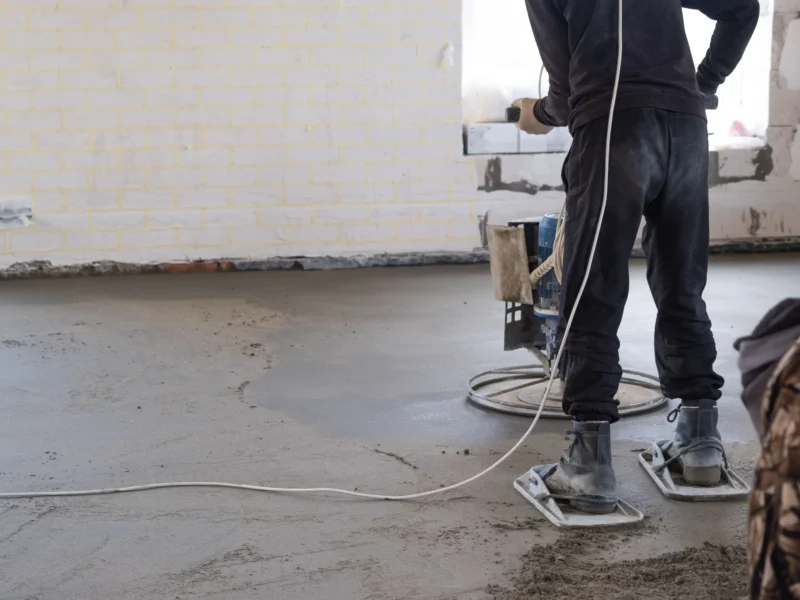
What Is a Subfloor, and Why Does Flatness Matter?
The subfloor is the structural layer beneath your finished floor. In a raised home it is plywood or OSB over the joists; in most Sarasota homes it is the concrete slab itself. Your finished floor is only as flat as the surface under it. Makers of vinyl plank and laminate set tight tolerances: no more than 3/16 inch of variation over a 10-foot span on most products. Lay a floating floor over a dip and the planks rock, the locking joints strain, and the seams separate over time. Tile cracks when the slab flexes or the mortar bed varies in thickness. Leveling the subfloor protects both the floor and its warranty.
When Do You Need Concrete Leveling?
You need leveling when the slab is uneven enough to affect the floor above it. Carpet hides a small dip. Vinyl plank does not, and you feel it as a soft, rocking spot. Some signs are easy to spot; others appear only when you set a level on the floor. Check for these before you order new flooring:
- A ball or marble rolls across the floor on its own.
- Gaps open between the baseboard and the floor, or between the floor and a door.
- Existing tile has cracked, or grout lines have failed.
- The floor sounds hollow or feels spongy in spots.
- A long level or straightedge shows dips and high spots over a few feet.
A new slab can also need work, since concrete cures with minor ridges and trowel marks. If you plan to install vinyl plank or laminate, flatness matters more than it does with carpet, which hides small flaws.
Concrete Leveling Methods and Cost
A contractor picks a method based on how far off the slab is and whether it sank or cured unevenly. The table shows average costs across the US market, not a Filar Flooring quote; your price depends on slab condition, square footage, and access. Most contractors also set a minimum charge of $300 to $2,000.
| Method | Average Cost (per sq ft) | Best For |
|---|---|---|
| Self-leveling underlayment | $2.50 to $7 | Filling dips and low spots before new flooring |
| Concrete grinding | $1 to $4 | Shaving down high spots and ridges |
| Mudjacking (slabjacking) | $3 to $6 | Raising a sunken slab back into place |
| Polyurethane foam injection | $5 to $25 | Precise lifts, fast cure, and tight access |
| Stone slurry grout | $6 to $15 | Heavier lifts that need added durability |
For interior floors before new flooring, self-leveling underlayment is the usual choice. A crew cleans and primes the slab, then pours a liquid compound that flows into the low areas and hardens flat within hours. When the slab tests high for vapor, a moisture barrier adds $0.20 to $0.75 per square foot. For a slab that has settled, mudjacking and foam injection lift it from below instead of burying the problem under a new layer. The right method depends on the cause, so a contractor assesses the slab before quoting.
How to Install Vinyl Plank or Laminate Flooring on Concrete
Once the slab is flat and dry, vinyl plank and laminate both go down as floating floors over concrete. The steps run the same for each, though laminate needs more moisture protection because its fiberboard core swells if water reaches it. Work through these stages in order:
- Clean the slab. Remove dust, old adhesive, and grease so the floor sits flush.
- Test for moisture. Tape a plastic sheet to the slab for 24 hours, or use a calcium chloride kit, to gauge vapor levels.
- Lay a vapor barrier. Roll out 6-mil polyethylene and overlap the seams to block moisture from below.
- Add underlayment if needed. Use a pad for sound and comfort unless the planks have one attached.
- Install the floor. Leave a 1/4-inch expansion gap at the walls and stagger end joints at least 6 inches from row to row.
After the last row, reinstall the baseboard to cover the expansion gap. A flat slab makes each step faster and the finished floor more stable. For a professional job, our flooring installation team handles slab prep, moisture control, and layout in one project.
Do You Need Underlayment for Vinyl Flooring on Concrete?
You need a vapor barrier on concrete, and in most cases you need underlayment too. Concrete wicks moisture from the ground, so a 6-mil barrier is the minimum defense under vinyl plank. Many luxury vinyl planks ship with an attached pad. That pad replaces separate underlayment, but you still need the barrier. If your planks have no pad, a thin underlayment adds cushioning and hides tiny imperfections in the slab. Skip the barrier and trapped moisture can lift the floor and feed mold. Check the manufacturer’s instructions, since some warranties require a specific underlayment.
Moisture and Mold Under Flooring
Concrete and moisture go together in Florida. A slab pulls water vapor up from the ground year-round, and Sarasota’s humidity adds to the load. Trap that moisture under a new floor and mold and mildew take hold. You control it during slab prep, before the floor goes down. Deal with two things first: any hidden mold and the old vinyl that may be trapping moisture.
Is Mold Under Flooring Dangerous?
Yes. Mold under flooring releases spores that can irritate the lungs and trigger allergy or asthma symptoms, and some species affect sensitive people more. A musty smell, discoloration, or a floor that stays damp are warning signs. Beyond health, mold rots organic underlayment and can spread to subfloor framing in raised homes. If you find mold during a tear-out, fix the moisture source before you install anything new. A proper vapor barrier and a level, sealed slab keep moisture out and stop the problem from returning.
How to Remove Old Vinyl Flooring From Concrete
Strip out the old vinyl first, before leveling or installing a new floor. Floating vinyl lifts out fast: pull up the planks and the underlayment, then sweep the slab. Glued-down vinyl takes more work. Cut it into strips with a utility knife, warm the adhesive with a heat gun, and scrape the pieces up with a floor scraper. A long-handled scraper or a power scraper speeds up large rooms. Once the vinyl is gone, clear the leftover adhesive with a solvent or a grinder so the slab is clean enough to level and bond a new floor.
Getting a Level, Moisture-Safe Floor
A level, dry slab supports any floor you install on it. Start by checking the slab for dips, high spots, and moisture, then match the fix to the problem: self-leveling compound for low areas, grinding for ridges, and slab lifting for settlement. Add a vapor barrier before any floating floor on concrete, and clear any mold before the new floor goes down. Do these in order and you protect the floor and your indoor air. Filar Flooring handles concrete leveling and floor prep for Sarasota homes, so the base is right before the first plank goes in. See more on our concrete leveling page.
Contact Filar Flooring today for a free consultation and an assessment of your slab.
Contact us for a free in-home estimate. We'll help you find the perfect flooring solution for your home and budget.
GET A FREE QUOTE