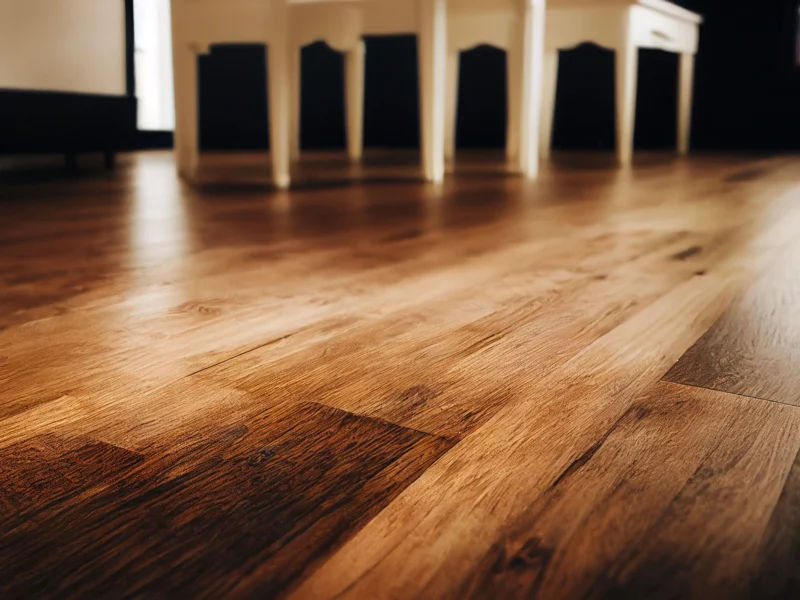
What to Clean Hardwood Floors With
About half the products labeled “safe for wood floors” will damage your finish over time. Vinegar is acidic enough to dull polyurethane. Steam mops force moisture into seams between planks. Oil soap leaves residue that yellows. Stick with pH-neutral, water-based cleaners formulated for sealed hardwood. Spray the cleaner onto the mop pad rather than directly onto the floor to control how much liquid touches the wood.
| Cleaning Method | Best For | Avoid If |
|---|---|---|
| Microfiber dust mop | Daily grit and pet hair removal | Floor has sticky spills (won’t lift them) |
| Damp mop + pH-neutral cleaner | Weekly cleaning of sealed hardwood | Floor is unfinished or wax-coated |
| Vinegar solution | Not recommended for hardwood | Floor has polyurethane or aluminum oxide finish |
| Steam mop | Tile and laminate surfaces | Any real wood floor (solid or engineered) |
| Oil soap | Occasional use on unfinished wood | Floor will be refinished later (residue interferes) |
For engineered hardwood, add one step: check your manufacturer’s care guide. Some engineered floors have thinner wear layers that tolerate fewer deep-cleaning cycles. A microfiber mop and a spray bottle of wood-safe cleaner handle 90% of what engineered floors encounter.
How to Deep Clean and Polish Hardwood Floors
Deep Cleaning Engineered and Solid Hardwood
Deep cleaning goes beyond your weekly routine. Do it once or twice a year, or whenever the floor looks hazy despite regular care. Vacuum with a hard-floor attachment to pull dust from between planks. Then apply a hardwood-specific cleaning solution in four-foot strips so it doesn’t sit on the wood too long. Mop with light pressure, moving with the grain. Rinse the pad frequently to avoid dragging dissolved grime back across the surface.
Solid and engineered hardwood respond to the same process as long as both have a sealed finish. The difference shows up later: solid hardwood can be sanded and refinished multiple times. Engineered hardwood with a wear layer thinner than 2mm may tolerate only one sanding. Know your floor’s spec before you decide between another cleaning pass and a hardwood floor refinishing project.
How to Make Hardwood Floors Shine Again
Dull hardwood floors usually trace back to wax buildup from wrong products or a finish worn through by years of foot traffic. A hardwood floor polish fills micro-scratches in the finish coat and adds a layer that reflects light evenly. Apply a thin coat with a flat-pad applicator, let it dry per label instructions, and keep traffic off for an hour. Polish every two to four months depending on traffic volume.
If polish stops restoring the shine, the finish itself has worn through. You need a screen-and-recoat or a full sanding at that point. Filar Flooring handles both for Sarasota homeowners, from light buff-and-coat refreshes to full-sand restorations.
How to Fix Scratches, Stains, and Water Damage
How to Remove Scratches from Hardwood Floors
Surface scratches sit in the finish layer, not the wood itself. Hide them with a wood floor touch-up marker that matches your stain color, or rub a small amount of floor polish into the scratch with a soft cloth. Deeper scratches that expose raw wood need filling. Apply wood filler matched to your floor’s species and stain, sand flush after drying, then seal with a thin coat of polyurethane. For scratches across a wide area or multiple planks, professional sanding produces a more uniform result than spot repairs.
How to Get Stains and Paint Off Hardwood Floors
Stain removal depends on the source. Water stains (white rings or cloudy patches) often respond to a cloth dampened with mineral spirits, rubbed along the grain. Dark stains that have penetrated the wood need oxalic acid applied to the spot, left for the recommended time, then neutralized and wiped clean. Test any chemical in a closet first.
Paint removal varies by type. Soften latex paint with a damp cloth and scrape with a plastic putty knife at a low angle. Oil-based paint requires mineral spirits on a rag, applied sparingly to avoid soaking the surrounding wood. Avoid metal scrapers on finished floors. They gouge the finish and create new scratches.
How to Fix Water-Damaged Hardwood Floors
Minor water damage shows up as cupped planks (edges higher than centers) or surface discoloration. A dehumidifier running for several days can pull enough moisture from the wood to flatten mild cupping. Planks that stay warped after two weeks need more than passive drying. Severely buckled or blackened boards require replacement: a professional removes the damaged sections, sources matching planks, and blends the repair into the surrounding floor. Filar Flooring’s hardwood flooring installation team handles partial replacements alongside full-room installs across Sarasota.
How to Fix Squeaky Hardwood Floors
Squeaks happen when wood rubs against wood or against a nail. The subfloor and the plank shift under weight, and that friction produces the noise. Walk slowly across the squeaky area while someone listens from below (if you have crawl space access). From below, drive a short screw through the subfloor into the squeaking plank to pull both layers tight. From above, specialty breakaway screws designed for hardwood work without leaving visible holes. Talcum powder between planks sometimes quiets minor squeaks by reducing friction at the seam.
Persistent squeaks across large areas often point to a subfloor issue: uneven concrete, deteriorating plywood, or joists that have shifted. These situations call for professional assessment because the fix involves accessing the structural layer beneath your finished floor.
When to Call a Professional for Hardwood Floor Repair
Regular cleaning and spot repairs go a long way, but every floor reaches a point where maintenance alone falls short. Consider professional refinishing or repair when you notice any of the following:
- Finish has worn through to bare wood in hallways, doorways, or kitchen paths
- Scratches cover large areas and individual touch-ups look patchy
- Planks stay cupped or crowned after humidity correction
- Squeaks persist across multiple rooms despite screw-down repairs
- Water damage has blackened or buckled sections of the floor
- The floor has not been sanded or recoated in over ten years
Filar Flooring works with Sarasota homeowners on screen-and-recoat refreshes, full sand-and-refinish restorations, and partial plank replacements. Each project starts with an on-site assessment of condition, species, and finish type. Let’s get started. Contact us today for a free consultation.
Contact us for a free in-home estimate. We'll help you find the perfect flooring solution for your home and budget.
GET A FREE QUOTE